
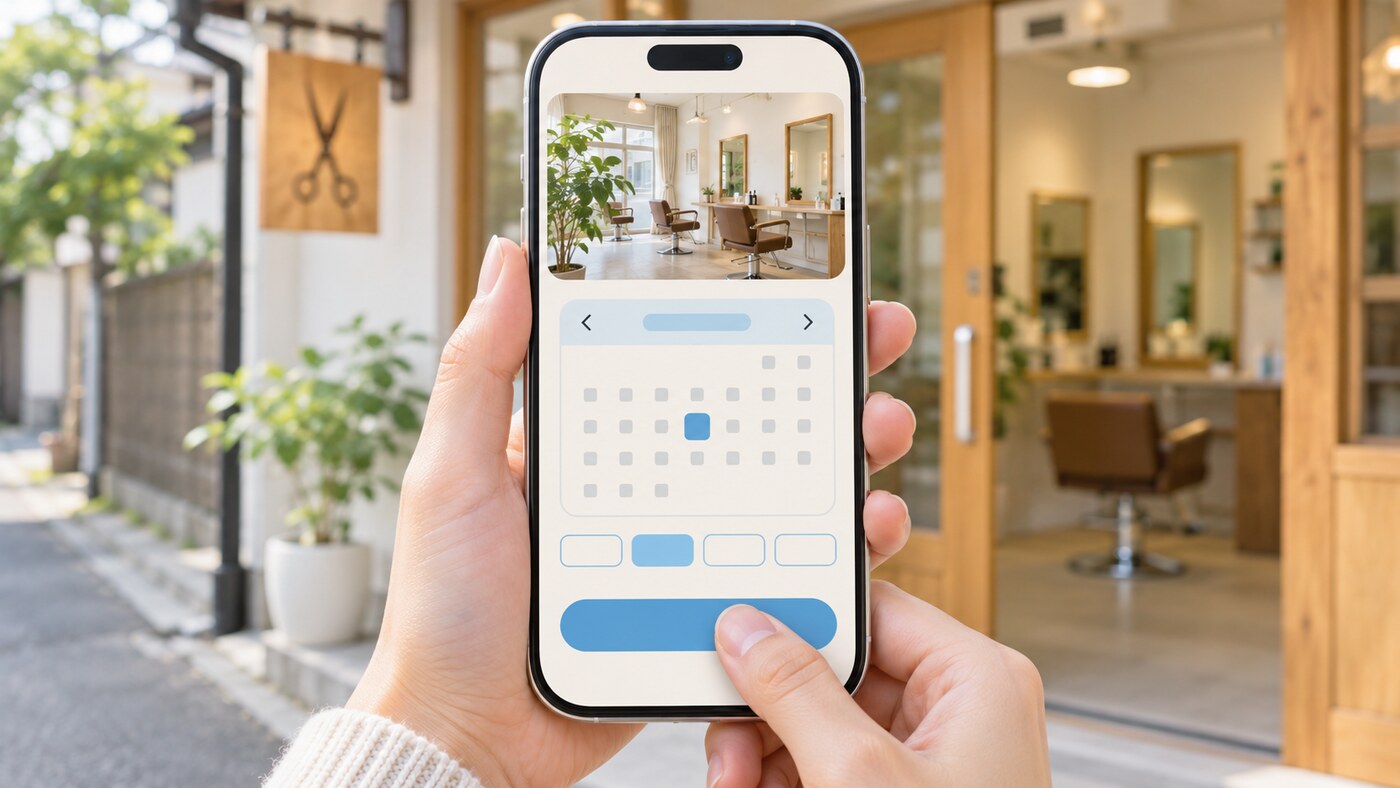
Imagine booking a haircut at an unfamiliar salon for Saturday afternoon. Your budget is ¥6,000 and you want to know whether you can walk there from the station. Pick one task like this, then search for the shop by name on your phone. If possible, hand the phone to someone who has never used your site. Watch where they pause before offering any directions.
Walk through a booking in five minutes
- Minute 1 — Find the shop. Open the site from a search result. Can you identify the right branch, its nearest station and the place to start booking? If you open the wrong branch, note which wording led you there.
- Minute 2 — Check the price. Find the tax-inclusive haircut price and add any required extras, such as a shampoo. Count how many screens you need to revisit before you can tell whether the total fits your budget.
- Minute 3 — Plan the visit. Open the map from the address. Check the station exit, building name and floor. Return from the map and see whether you can continue booking at the same branch.
- Minute 4 — Pick a time. Check the branch, service and time in the booking form. Write down any choice you have to make twice. If your preferred time is unavailable, try finding another opening.
- Minute 5 — Check what happens after submission. In your own test environment, submit the booking and inspect the confirmation screen and notification. Is the appointment confirmed or awaiting a reply? Can you find the time, branch and contact for changes? If you cannot reserve a real slot, stop before submitting and check the confirmation screen separately.
An illustrative fix: carry the selected service into booking
Take a fictional salon, Aoba Hair. Its price list says “Haircut ¥5,500.” Tapping “Book” opens the booking provider’s list of every branch. After finding the station branch again, the customer learns that a required shampoo adds ¥1,100. Only now do they discover the appointment exceeds their budget.
On the revised page, the line reads “Haircut and shampoo — ¥6,600 including tax.” Directly below it is “See times at the station branch.” If the booking platform supports it, that link opens the correct branch with the haircut already selected. A visitor with a ¥6,000 limit can decide straight away; someone happy with the price can go straight to choosing a time.
Start with the first point of hesitation
Record one sentence with three details: the screen, the visitor’s question and what they tapped next. For example, “I couldn’t tell the total on the price list, so I went back to the top to find the terms.” Fix that point and ask a different person to try the same budget and time. Could they state the total? Could they find an open slot without backtracking? Use those same two questions before and after the change.